Metal + vinyl
A trim break at the corner or floor line, with color picked to bridge the two. See vinyl siding.
Material
| Steel | Aluminum | |
|---|---|---|
| Impact | High impact resistance | Softer than steel |
| Weight | Heavier | Lighter, easier on the wall |
| Rust | Protected by its finish, specified for residential exposure | Rust-proof |
| Looks | Panels in standing-seam or lap profiles | Standing-seam or lap profiles |
| Life | Long service life when the finish is specified correctly | Long service life, no rust |
Either way, the choice comes down to where the metal goes. Steel makes sense on walls that take knocks, like a garage front. Aluminum makes sense where lighter weight matters.
Transitions
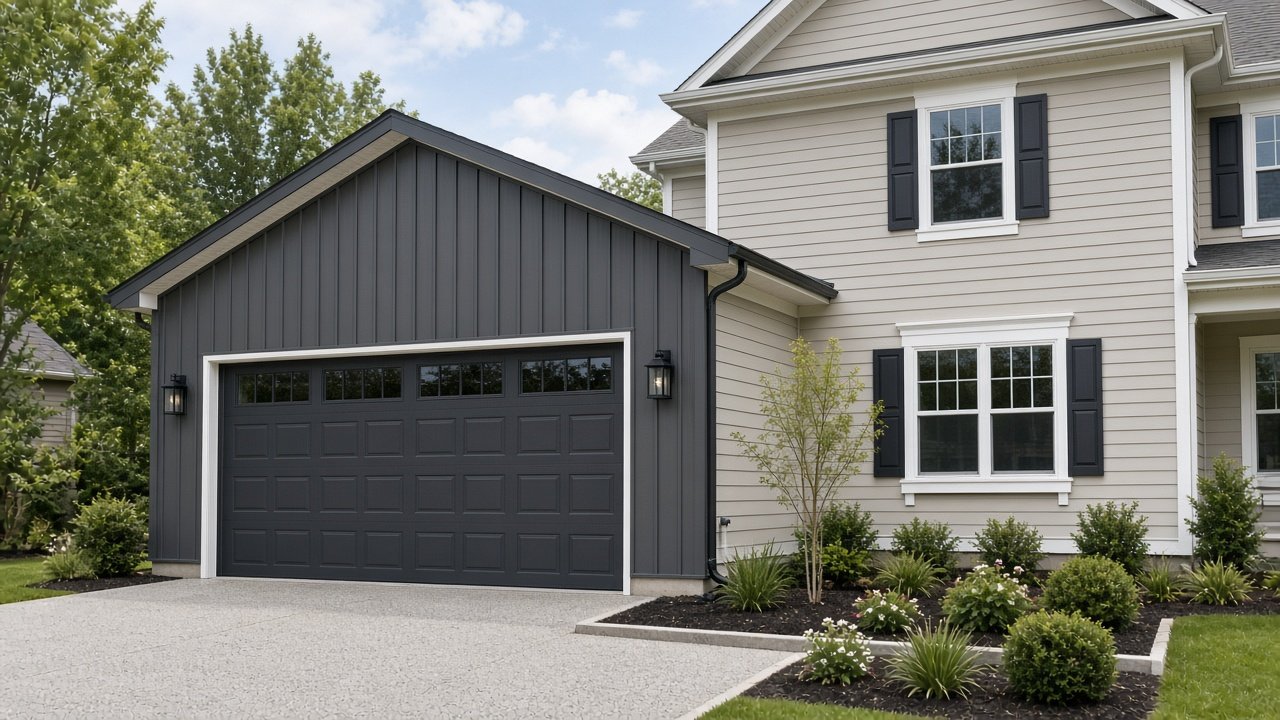
Most metal jobs around Vienna are part of a mixed exterior, and the joins are where they succeed or fail. We plan the trim and color at every transition before ordering, so the materials meet cleanly and water has nowhere to sit.
A trim break at the corner or floor line, with color picked to bridge the two. See vinyl siding.
A shared trim line and a color plan so the two read as one design. See fiber cement siding.
Trim and flashing at the join, planned so future cedar recoats stay off the panels. See wood & cedar siding.
Pricing
Metal usually sits at the higher end of the price range and isn’t the budget pick. We quote it on-site, because these factors move the number far more than the panel color does:
Because every one of those depends on your house, a phone figure would just be a guess. We measure, look at the wall, and put each item on the written estimate so you can see what a smaller scope would save. Ranges for other materials are in the Vienna siding cost guide.
Warranty
A metal finish warranty is only as good as the installation under it. These four details decide whether it holds:
Handling and fastening that keep flat panels from waving.
The pattern and spacing the manufacturer specifies.
The right layer behind the panels for drainage.
Clean detailing at windows and roof edges.
Questions
Aluminum won't. Steel relies on its factory finish, so we specify one rated for residential exposure and keep cut edges and fasteners to the manufacturer's rules.
Steel has high impact resistance, which is one reason homeowners choose it. Aluminum is lighter and softer, so it suits walls that don’t take a beating. If storm damage is behind your project, read our storm damage and insurance guide.