New construction · Additions · Full re-sides
Siding Installation in Vienna, VA
Siding installation in Vienna, VA has to survive humid summers and freeze-thaw winters, and most early failures we repair trace back to rushed flashing, stapled house wrap, or fasteners driven too tight. We install in five phases, in the same order on every house, so the layers behind the siding are right before the first panel goes up.
Vinyl, fiber cement, wood, cedar, and metal, installed to each manufacturer’s spec. You get a written start date before you sign.
Request a free estimate
Phase by phase
Five Phases, From Bare Wall to Final Trim
What each phase involves, what you’ll see from the driveway, and roughly how long it takes on a typical house.
Prep & sheathing check
What we do
Stage materials and the dumpster, keep walkways and the driveway clear, then remove old siding where there is any and inspect the sheathing. Rotted or damaged sheathing is replaced, not covered over.
What you’ll see
Bare walls for a short stretch while the sheathing is checked and repaired.
House wrap, seams taped
What we do
A continuous weather-resistant barrier over the whole wall, with every seam taped. Wrap that’s stapled up and left loose is one of the shortcuts we most often find behind failed siding.
What you’ll see
The house wrapped in a single, tight membrane.
Flashing at every opening
What we do
Flashing at every window, door, and penetration (vents, hose bibs, light fixtures) before any siding touches those openings. This is the step most shortcuts skip.
What you’ll see
Flashing framing each window and door.
Hang panels to spec
What we do
Starter strip, J-channel, then courses fastened the way the manufacturer requires for that material. Vinyl gets room to expand, fiber cement gets its fastener pattern and clearances, and cedar goes up already sealed.
What you’ll see
The new exterior going up wall by wall.
Trim & cleanup
What we do
Corners and trim finished to match, and debris hauled away. We clean up at the end of every workday, not just on the last one.
What you’ll see
A finished house and a clear yard.
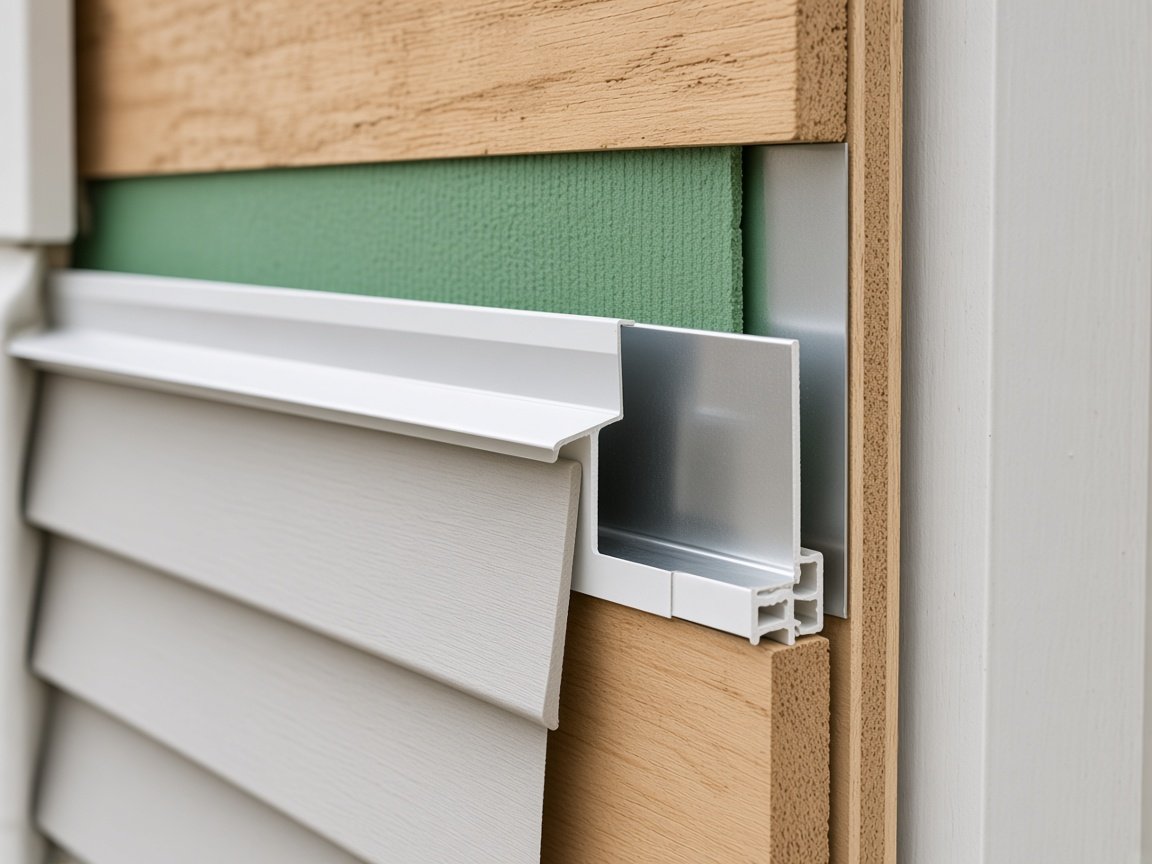
Inside the wall
The Layers Behind Your Siding
The panels are the part you see. The layers behind them decide how long they last.
- Sheathing: The structural surface everything fastens to. We repair damaged sheathing before anything covers it.
- House wrap: Keeps wind-driven rain off the sheathing while letting the wall dry out. Continuous, with taped seams.
- Flashing: Steers water away at windows, doors, and penetrations, the places leaks usually start.
- Siding: Vinyl, fiber cement, wood, cedar, or metal, fastened to its manufacturer’s instructions.
- Trim: Corners, J-channel, and casings that close off the edges and finish the look.
By material
Material-by-Material Installation Specs
Each material has its own installation rules. Here is how the fourth phase changes depending on what goes on your walls.
| Material | How it’s fastened | What we watch for | Details |
|---|---|---|---|
| Vinyl (standard, mid-grade, insulated) | Nails centered in the slot, never driven tight. Starter strip and J-channel first. | Room to expand and contract through freeze-thaw, so courses don’t buckle. | Vinyl siding grades and profiles |
| Fiber cement (James Hardie) | James Hardie fastener patterns, cut and handled with the right tools. | Manufacturer clearances, which the warranty depends on. | James Hardie fiber cement options |
| Wood & cedar | Boards sealed on all six sides before they go up. | Flashing and ventilation so the back face can dry. | Cedar styles and upkeep |
| Metal (steel, aluminum) | Panel systems for full elevations or accent walls. | Transitions where metal meets other materials. Quoted on-site, not as a generic add-on. | Steel and aluminum panels |
Vinyl (standard, mid-grade, insulated)
How it’s fastened
Nails centered in the slot, never driven tight. Starter strip and J-channel first.
What we watch for
Room to expand and contract through freeze-thaw, so courses don’t buckle.
Vinyl siding grades and profiles →Fiber cement (James Hardie)
How it’s fastened
James Hardie fastener patterns, cut and handled with the right tools.
What we watch for
Manufacturer clearances, which the warranty depends on.
James Hardie fiber cement options →Wood & cedar
How it’s fastened
Boards sealed on all six sides before they go up.
What we watch for
Flashing and ventilation so the back face can dry.
Cedar styles and upkeep →Metal (steel, aluminum)
How it’s fastened
Panel systems for full elevations or accent walls.
What we watch for
Transitions where metal meets other materials. Quoted on-site, not as a generic add-on.
Steel and aluminum panels →Adding onto a house? We match the existing profile when it’s still available. If a color or profile has been discontinued, we plan a clean change instead of a near-miss.
Before the start date
Permits, Timing and Weather Windows
Town of Vienna or Fairfax County?
Most exterior siding work needs a building permit, especially a full re-side. Inside the Town of Vienna, full tear-offs usually need a Town building permit, not only a Fairfax County one. Outside the Town limits, the county permit applies. We handle the application as part of the project, so you don’t have to work out which office applies.
When to schedule
Spring through fall gives the widest weather window. Vinyl and fiber cement can also go up in cooler months, as long as temperatures stay within the manufacturer’s fastening tolerances. If your timeline runs into a weather constraint, we’ll tell you when we quote, not halfway through the job.
Before you book