Featured look
Siding Contractors in McLean, VA for Larger, Custom Homes
- The house. Most McLean homes are detached, many from mid-century, often with a later wing that has to read as one elevation.
- The problem. Premium trim without flashing, mixed materials that never joined cleanly, or a tired original skin next to a newer addition.
- What we install. Cedar, fiber cement, and combinations of the two — the usual McLean mix.
McLean re-sides tend to be design decisions as much as repairs: more wall, more trim, and a mix of materials that has to read as one house.
Request a free estimate
McLean housing
Mostly Detached Homes, Many From Mid-Century
80.8% of McLean’s 17,765 housing units are detached single-family homes.
54.5% were built between 1950 and 1979.
22101 · 22102 The two ZIPs that cover most of McLean, with West McLean on 22102.
Sources: U.S. Census Bureau, American Community Survey 2019–2023 5-Year Estimates, Table B25024 (Units in Structure), McLean CDP, Virginia; U.S. Census Bureau, American Community Survey 2019–2023 5-Year Estimates, Table B25034 (Year Structure Built), McLean CDP, Virginia; U.S. Census Bureau, 2020 ZCTA-to-Place Relationship File (land-area overlap) (22101 ≈ 53% and 22102 ≈ 36% of McLean’s land); Wikipedia, “McLean, Virginia” (accessed Oct 1, 2026).
McLean also takes in the older communities of Langley and Lewinsville, which merged in 1910 to form it. On a mid-century house with a later wing, the job is often making the two read as one.
On houses of that age, we look closely at the sheathing and at how later additions were tied into the original walls before we price anything. That’s where the surprises are, and it’s why a McLean estimate comes after a walk around the whole house, not from a photo.
Design options
Mixing Lap, Shake and Cedar on One Elevation
Entry-level vinyl is less common on McLean jobs than cedar, fiber cement, and combinations of the two. These are the three directions owners usually weigh:
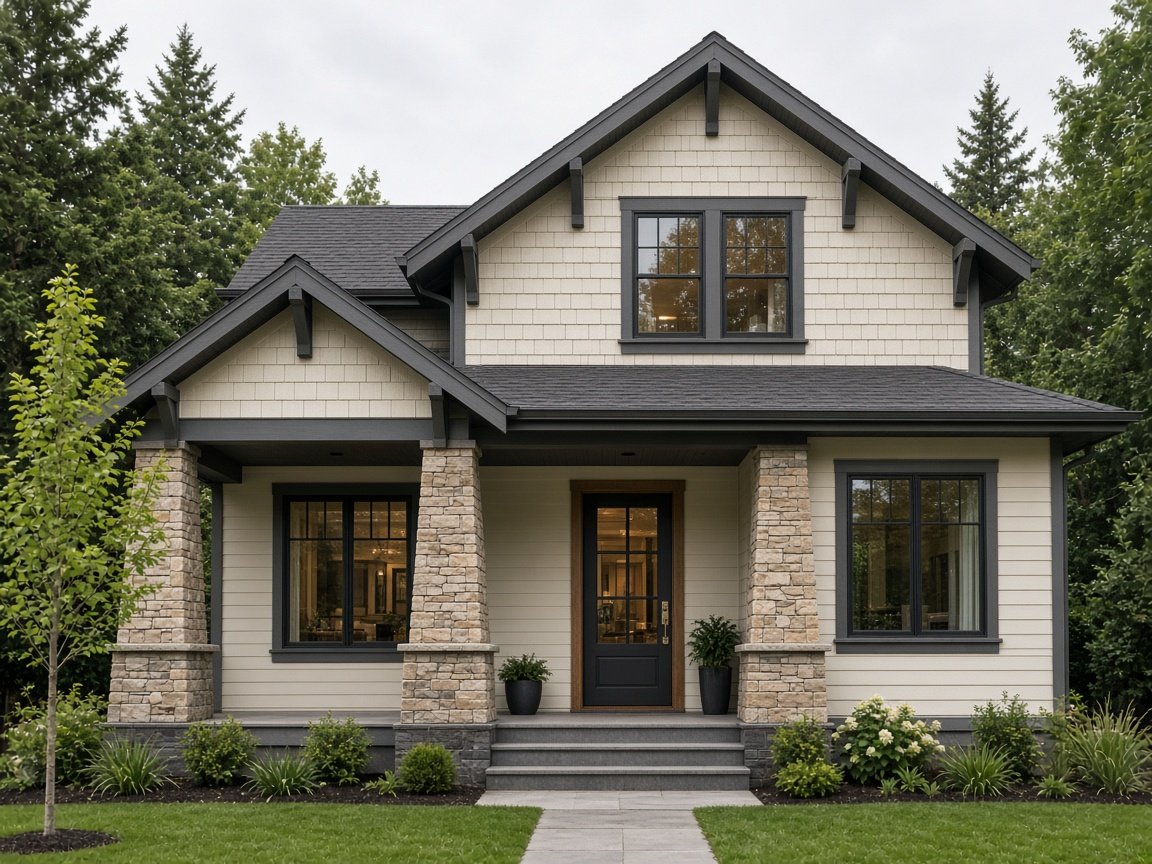
Lap body, shake gables
Fiber cement lap on the main walls, with shingle or shake in the gables to break up tall elevations.
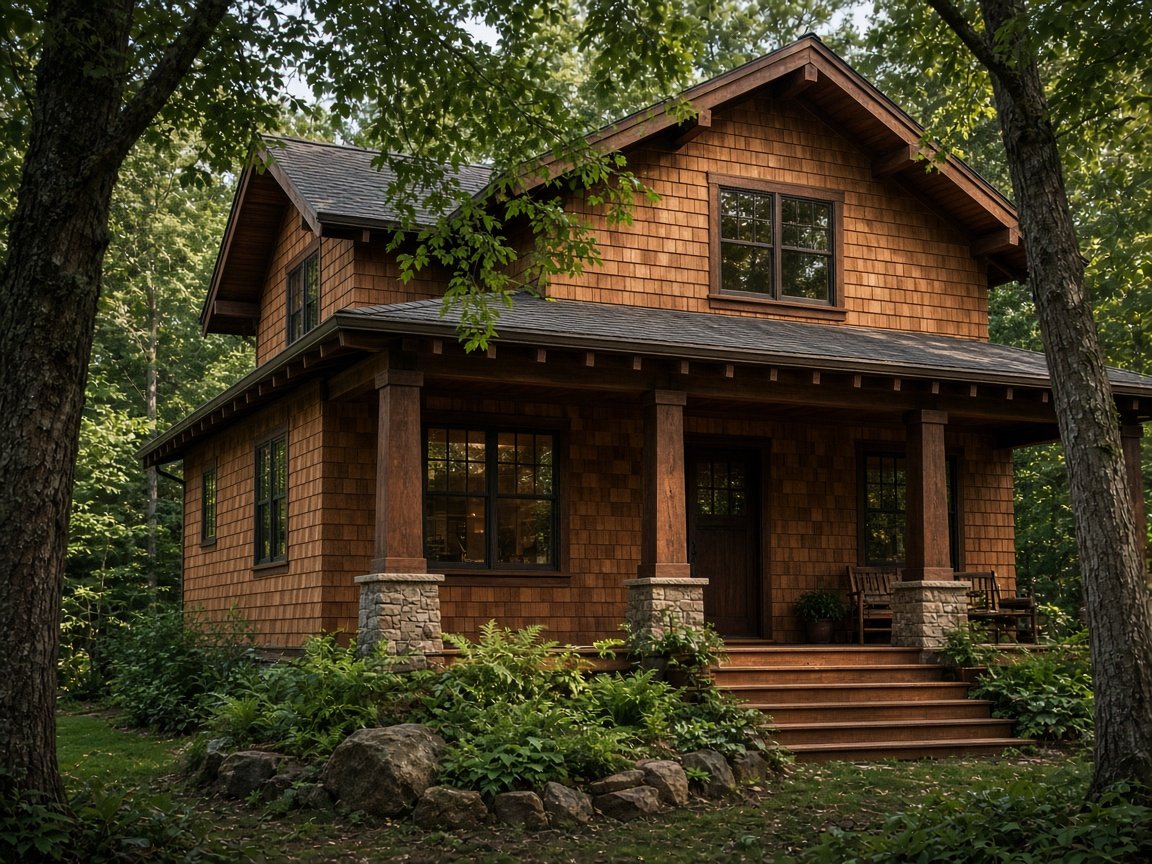
Cedar accents
A low-upkeep fiber cement body, with real cedar at the entry, porch, or a single feature wall.
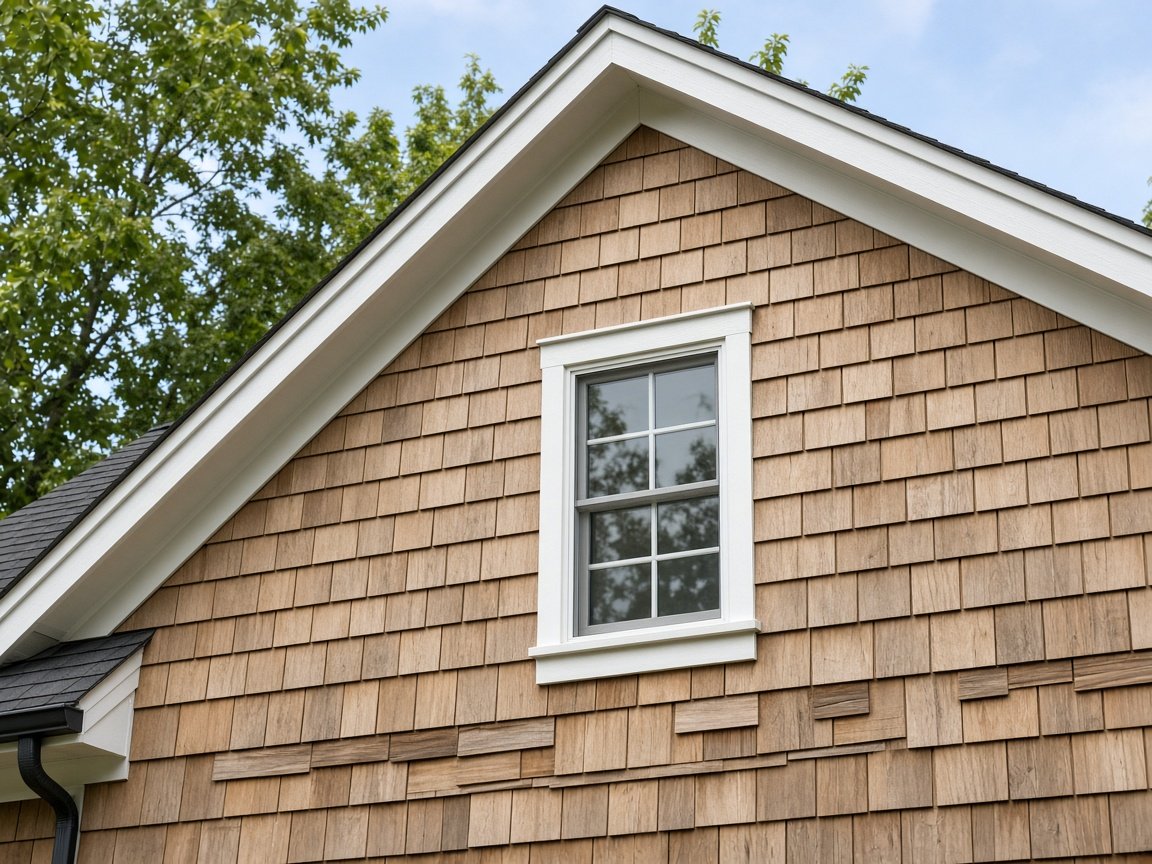
All cedar
Full cedar for the grain and character, with the recoat schedule that comes with it.
The joins make or break a mixed elevation. We set the trim lines and color plan where one material meets another before ordering, so a gable change or cedar entry looks designed rather than patched in. Details on each material: James Hardie fiber cement and cedar and wood siding.
Trim failures
Expensive Trim, Missing Flashing
A repair we see on larger homes is premium trim that was installed without the flashing it needed. The boards look right from the street, but water gets behind the casings and corner boards and rots the sheathing out of sight.
Signs to look for: soft spots at the bottom of corner boards, paint peeling along the lower edge of casings, and stains on interior window returns.
The fix is to remove the trim, repair the wall, flash the opening properly, and reset the trim, matching the original profile where it’s still available.
Large lots
Scaffolding Days and Landscape Protection
Taller walls and mixed materials mean more days on scaffolding. So the site plan is part of the written estimate, not an afterthought. Tell us about irrigation heads, landscape lighting, or plantings you want protected, and they go into the plan.
Access
Which side yard the crew and materials use, agreed before day one.
Planting beds
Protection for beds and shrubs along each wall we work.
Scaffold schedule
How long scaffolding stands on each elevation, in writing.
Historic review
Inside the Langley Fork Historic District
Fairfax County’s Langley Fork Historic Overlay District covers about 71 acres around the junction of Georgetown Pike and Chain Bridge Road in McLean. The county’s Architectural Review Board reviews exterior alterations there against the district’s own design guidelines. The district was created in 1980 to protect a rare surviving crossroads village, including the mid-19th-century Langley Ordinary and toll house.
Most McLean homes are outside the district, but if yours is inside or on its edge, we’ll flag it after the site visit and plan the material choice around the review.
Source: Fairfax County Department of Planning and Development, Historic Overlay Districts and Langley Fork Historic Overlay District Design Guidelines (fairfaxcounty.gov, accessed Oct 1, 2026).
Choosing
Material Options for Larger McLean Homes
| Cedar | Fiber cement | Mixed | |
|---|---|---|---|
| Look | Real grain, natural texture | Crisp lap, shingle or panel | Fiber cement body, cedar or shake accents |
| Upkeep | Recoat every 3–7 years | Repaint about 10–15 years on factory finish | Cedar upkeep limited to the accent areas |
| Best for | Matching historic or wood homes | Tall, exposed elevations | Adding character without whole-house upkeep |
| Price | Quoted on-site | ≈ $22k–$45k full re-side | Quoted on-site |
Full ranges are in the siding cost guide.